
How The Chedi Luštica Bay Grows Revenue Year After Year: Real Lessons for Hoteliers
In today’s hospitality landscape, stability is the exception, not the rule. Markets shift, guest behaviour changes, and geopolitical events can reshape demand overnight. Yet some hotels manage not only to adapt, but to grow revenue year after year.
One of them is The Chedi Luštica Bay, one of Montenegro’s leading luxury resorts.
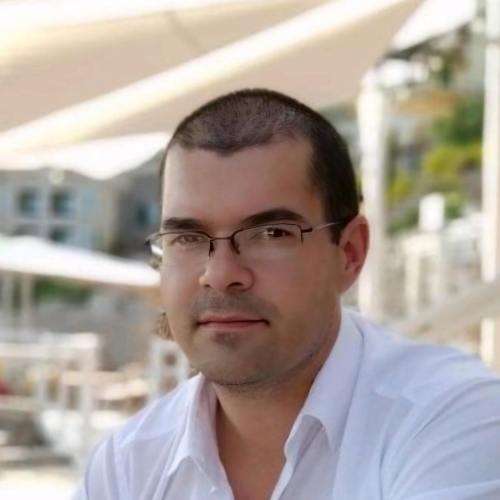
As part of the Best Stay Talks series, we sat down on site with Predrag Tomašević, Director of Revenue at The Chedi Luštica Bay, to talk about what it really takes to build profitability, resilience, and long-term performance in a volatile environment.
This conversation is not about theory. It’s about decisions made under pressure, and lessons every hotelier can apply.
From Pre-Opening to Revenue Leadership
Predrag’s career path mirrors that of many modern revenue leaders: operational grounding combined with strategic growth.
Originally from Podgorica, he moved to the Montenegrin coast in 2014 to join the pre-opening team of Regent Porto Montenegro, one of the country’s flagship luxury projects at the time. A few years later, he became part of another landmark development — Luštica Bay, joining The Chedi Luštica Bay during its pre-opening phase in 2018.
He started as Reservations Manager, gradually growing into the role of Director of Revenue, supported by strong leadership and a culture of learning.
“I had great support from the General Manager. That gave me the chance to learn more about the industry and grow into a role with real responsibility.”
Today, Predrag oversees revenue strategy for a complex operation that includes 111 rooms and suites, multiple F&B outlets, residences, beach operations, and a growing MICE segment — all within a large-scale destination development.
Looking Beyond Occupancy and ADR
One of the key messages from the conversation is clear: traditional KPIs are no longer enough.
While occupancy and ADR remain relevant, they don’t tell the full story of hotel performance.
At The Chedi Luštica Bay, the focus is firmly on profitability and value per guest.
Key metrics include:
RevPAR
GOP per available room (GOPPAR)
Total guest spend in-house
Department-level contribution
F&B and ancillary revenue performance
“We cannot rely only on occupancy and average room rate. Profitability is what really tells us whether the hotel is performing.”
This shift reflects a broader industry trend: volume without margin is no longer sustainable, especially in luxury and upper-upscale segments.
Revenue Is a Team Sport
Another recurring theme is cross-department collaboration.
Revenue growth at The Chedi is not the result of isolated pricing decisions. It comes from close alignment between revenue management, sales, marketing, and operations.
This became especially critical during periods of disruption.
Replacing Lost Markets: Agility Over Perfection
In 2022, the Adriatic region, including Montenegro, faced a major challenge. The conflict between Russia and Ukraine significantly impacted demand from Eastern markets, which had represented a substantial share of business.
For The Chedi, waiting was not an option.
“We had to replace this business very quickly. Markets are volatile. You cannot always plan long-term, sometimes you need a short-term strategy that works immediately.”
The response involved:
Rapid market repositioning
Stronger focus on Western markets
Faster digital activation
Tight coordination between commercial teams
The result: lost demand was replaced faster than expected, proving that speed and adaptability are now core commercial skills.
Technology as a Growth Enabler
Technology plays a central role in enabling that speed.
Predrag highlights the importance of:
Revenue Management Systems (RMS)
Business Intelligence tools
Digital marketing platforms
Google and social media channels
“With today’s tools, we can reach new markets much faster. Traditional sales actions take time to convert. Digital tools help us react immediately.”
For hoteliers, this reinforces a critical point: technology is no longer optional. It is the infrastructure that allows strategy to become action.
F&B and MICE: Strategic Revenue Drivers
Unlike hotels that rely primarily on rooms, The Chedi places strong strategic emphasis on Food & Beverage and MICE.
One standout example is the hotel’s restaurant located directly on the marina promenade, a high-visibility outlet that attracts both in-house guests and external visitors.
“F&B and MICE are key parts of our business. They contribute significantly to total revenue and profitability.”
This diversified approach reduces dependency on room revenue alone and strengthens overall financial resilience.
Personalization Without Overdoing It
Personalization is often discussed as a must-have, but Predrag offers a nuanced perspective.
Yes, The Chedi invests heavily in pre-arrival communication, understanding preferences, allergies, and guest needs. But there is a clear boundary.
“Personalization is important, but we try not to overdo it. Guests want to feel welcomed, not observed.”
The goal is discreet, thoughtful hospitality, allowing guests to discover the destination and experience something new, rather than feeling overly managed.
What Hoteliers Can Learn from This Conversation
This interview offers several clear takeaways for hotel leaders:
Focus on profitability, not just volume
Treat revenue as a cross-functional responsibility
Build agility into your market strategy
Use technology to shorten reaction time
Diversify revenue streams beyond rooms
Personalize with care and discretion
These are not trends, they are skills and capabilities.
Continue the Conversation at Best Stay 2026
This conversation with Predrag is part of a broader mission at Best Stay: to surface real experiences from people who run hotels, and turn them into practical learning for the industry.
You can continue this discussion live at: Best Stay 2026
Sheraton Zagreb Hotel
February 12–13, 2026Join hotel owners, general managers, commercial leaders, and future talent for two days focused on profit, people, and practical execution.